How to Test That Your Grounding Setup Is Actually Grounded
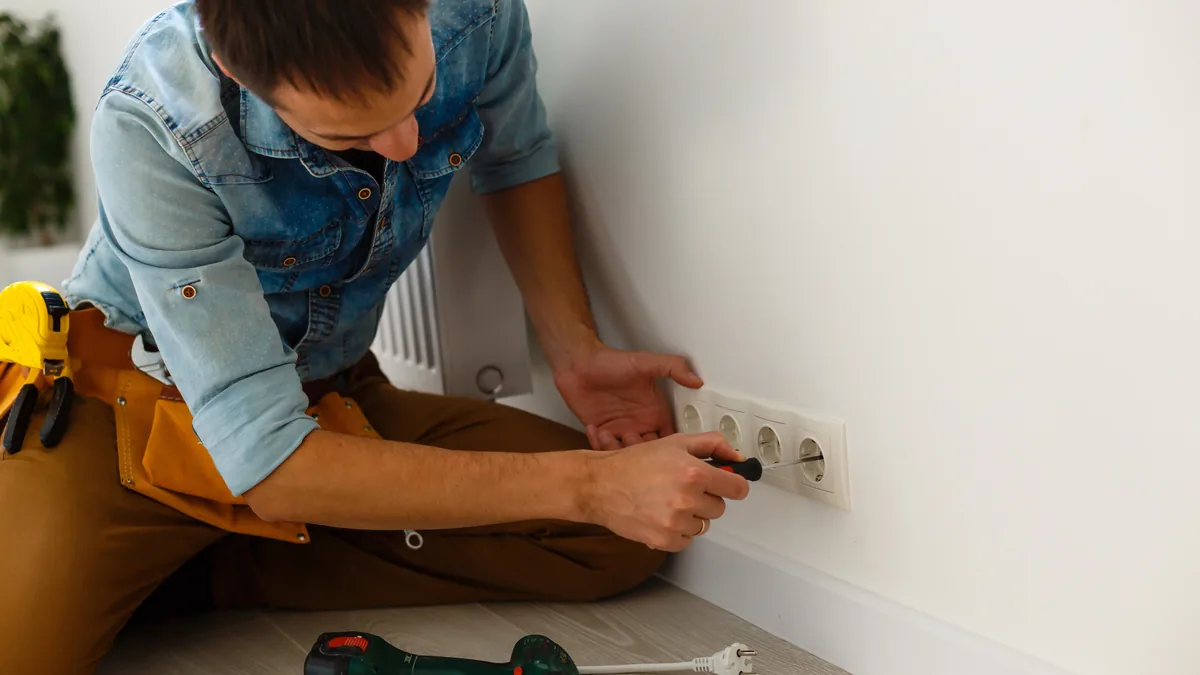
Here is the most important sentence on this whole site: a grounding mat plugged into an ungrounded outlet does absolutely nothing. No connection to earth, no electrons, no effect, placebo or otherwise. Older homes, miswired outlets, and cheater plugs are common. If you are going to bother grounding at all, spend five minutes and two cheap tools proving the circuit is real.
The Placebo Mat Problem
This is the honest reason so many people try grounding and feel nothing: they were never grounded. The mat looked plugged in, the sheet was on the bed, but the outlet had no real ground behind it, or a sock broke the skin contact, or the sheet had washed out. Call it the placebo mat problem. It is the single most common way earthing "fails," and it has nothing to do with whether grounding works. It has to do with whether you were ever actually connected. The rest of this page kills that problem in five minutes.
The two-tool test: an outlet tester (about $10 to $16) confirms your outlet is wired right and has a good ground. A continuity tester or multimeter confirms the mat surface actually connects to that ground. Both together take five minutes and settle it for good.
Step 1: Test the Outlet
Grounding cords connect only to the round ground port of a standard three-prong outlet. If that port is not truly grounded, nothing downstream matters.
- Get a plug-in outlet tester. A Klein RT110 or a Sperry GFI6302 runs $10 to $16 and has three lights that show wiring faults.
- Plug it into the outlet you plan to use for grounding.
- Read the light pattern against the legend on the tester. You want the "correct" or "correctly wired" pattern, which confirms a good ground connection.
- If it shows open ground, reversed wiring, or any fault, do not use that outlet for grounding. Use a different, confirmed outlet, call an electrician, or switch to a ground rod (Step 3).
An outlet tester is a good thing to own anyway, and it is the single cheapest way to avoid grounding to nothing. Our picks are on patches and testers.
Step 2: Test the Mat or Sheet for Continuity
Now confirm the conductive surface actually connects to that verified ground. Most grounding kits include a small continuity tester exactly for this. A basic multimeter also works.
- Plug the grounding cord into the outlet ground (or the kit's continuity tester into the outlet, per its instructions).
- Touch or clip the tester probe to the conductive surface of the mat or sheet, on the woven side where your skin sits.
- With a continuity tester, you want it to light or beep, showing an unbroken path. With a multimeter set to resistance (ohms), you want a low reading between the mat surface and the ground, ideally a small number of ohms, not "open" or infinite.
- A high or infinite reading means a break: a bad cord, a dead snap connector, a sheet that has lost conductivity from washing, or a mat that was never conductive to begin with.
Sheets lose conductivity over time, especially silver-fiber ones after repeated washing. Retest a sheet every few months. If continuity fails and the outlet is fine, the gear is the problem.
Step 3: The Ground-Rod Bypass (when you don't trust your wiring)
If your outlet fails the test, or you rent and have no idea what is behind the walls, skip the outlet entirely. Most grounding kits sell a ground rod: a metal stake you push into the soil outside, with a long cord that runs in through a window to your mat or sheet. This connects you straight to earth, no house wiring involved. It is the most reliable connection you can get, and it is what to use if your outlet test comes back bad.
The Mistakes That Leave People Ungrounded
- Assuming a three-prong outlet is grounded. A three-prong outlet can be wired with no actual ground behind it. Only a tester tells you.
- Socks, sheets, or clothing between skin and surface. The circuit needs bare skin. This is not a testing problem, it is a usage problem, but it produces the same "nothing happened" result.
- A washed-out sheet. Conductive threads degrade. A sheet that worked last year may read open now. Retest.
- Cheater plugs and surge strips. A three-to-two prong adapter or some power strips can break the ground path. Plug the grounding cord into the wall.
- Never testing at all. The big one. If you have not run the two-tool test, you do not actually know whether you are grounding or just believing.
The five-minute honesty check pays for itself
A tester costs about the same as one cheap dinner and it is the difference between running a real experiment and fooling yourself. If you are going to judge whether grounding does anything for you, judge a setup you have proven works.
See the testers we useGet the 1-page protocol + this grounding test as a checklist
The grounding test above, the setup, the skin-contact rules, and the safety cautions on one printable sheet. Free.
Send me the free protocol sheetOnce your setup passes, go run the protocol and, if you are skeptical, the two-week self-test. And read safety if you take any medication.